This is the home of Joe Clifford Faust, who:
  1. Is an elder in the Church of Christ,
  2. makes his living as an advertising copywriter,
  3. is the author of seven science fiction novels,
  4. is occasionally known as Mister Faust, an alleged singer-songwriter,
  5. is the writer and "artist" of The Home World, a hiatused web comic,
  6. is the guy who used to blog a lot about writing (it's all gone now, sorry),
  7. is an infrequent haunter of community theater stages,
  8. and is someone who went to high school in Wyoming, college in Oklahoma, and now lives in Ohio.
If the person you're looking for doesn't meet these criteria, then this isn't the him you're looking for.


Thursday, January 28, 2010

Top Ten Possible Endings of "Lost"  


I figure at least one of these will be right and that I will be hailed as a genius once All Is Revealed...
10) On a previously unexplored part of the island, the Statue of Liberty is found half-buried in the sand amid cries of "Damn you all to hell!"

9) One of the women wakes up in her bedroom at home and there is a man in the shower. He says his name is Bobby Ewing, and that she's just waking up from a bad dream.

8) The conspiracy becomes so dense that it implodes into a singularity. Television sets all over the world suddenly implode.

7) Man, I can't believe you haven't figured this out yet! The clue was there since the first season on 2obscure4U.com!

6) It doesn't matter because it turns out that Thomas Pynchon has been writing the show the whole time. Thomas Pynchon!

5) Everyone is rescued and they go to a small restaurant to celebrate. Someone orders onion rings. "Don't Start Believing" come on the juke box. A man goes into the bathroom. The screen goes black.

4) The island turns out to be an exhibit of humans in an alien zoo. No wait, that's the ending of the new Stephen King book. No wait, that's the plot of the Simpson's movie. No, that's from Slaughterhouse Five...

3) A shocking discovery is made: there are seven other people also on the island, and they have been waiting to be rescued since 1964.

2) We never learn the secret because the episode will be pre-empted by Obama's 1,245th press conference.

1) Actually, all will be revealed in Lost: The Motion Picture, due in theaters May, 2013!


Tuesday, January 5, 2010

Avatar Report Card  


After seeing James Cameron's Avatar, I have decided that it is impossible to give it just one overall rating as a movie. There are too many different aspects of it, including the groundbreaking effects. Films like this often turn out to be like the joke about the talking dog - who cares that what the dog said didn't make any sense? - because people end up salivating over one aspect of it, in this case, the visual effects. So here's my take on the components of Avatar.

World Building: A+
The most impressive since 2001: A Space Odyssey (the first talking dog movie).

Use of 3D: A
Only one or two 3D Cliches, the rest was a very natural integration that made the world very immersive. One problem: before the film was a preview for a trashy 3D knockoff involving pirahanas that will likely set 3D back 20 years.

Acting: B
Sigorney Weaver and Wes Studi are always welcome. Rockwell would have been a better Sam for the lead. Zoe Seldana was great, but I'm distressed by the Oscar buzz she's getting. If she bags a nomination, then the Motion Picture Academy owes Andy Sirkis a written apology.

Writing: C
It's James Cameron, so you don't expect Shakespeare. But hey, even George Lucas was at one time smart enough to turn the writing reins over to Lawrence Kasdan. Cameron continues to need a writing partner.

Plot: C-
Dances with Wolves meets Aliens in CG Blue. No surprises anywhere. I even called the last shot of the movie.

Alien Culture: D
As impressive visually as the film was, and as much as had gone into the technology to make the film and the thought behind the planet itself, the aliens deserved better than a dog's breakfast of stuff lifted from Native American and African cultures.

Music Score: D-
If Cameron really wanted something original and alien sounding, he should have worked Horner a little harder instead of settling for moments of New Age Wood Flute. See "Alien Culture".

Political Agenda: F
Cameron just bought himself another best picture nomination.

Unobtainium: F
The first time this was mentioned, I leaned over and asked my daughter, who had seen the film, if that was a joke. She said "No" and I almost got up and walked out of the theater. Total buzz kill.

Overall: I think it's worth seeing, and I'm glad I went and popped extra for the funky pair of glasses. This is not going to be the same when it comes out on your TV set, and it won't be the same as 2D in the second run theater (or for those of you in Japan). It's like Star Wars (which I hated at the time and still don't care for) - a landmark that demands to be seen on a big screen.

EXTRA POINTS

I Have Reservations About: 1) Avatar merchandise under the Christmas tree. 2) The Alien Culture becoming a neo-religion... you read it here first.

One Question: Was Roger Dean given a special thank-you in the end credits for inspiration for some of the visuals?

DIY Special Effects: If you see it in 3D, wear your glasses into the lobby and look eye-to-eye at someone else with the glasses on. Then close one eye. Thank me later. (H/T: Stephen Hughes.)


Saturday, January 2, 2010

The 21 Best Albums of the 21st Century  


When the last decade ended, all of my Last.fm friends fired up their iPods and word processors to turn in their lists of the 21 best albums of the 21st Century. I wanted to do this too, so I fired up the Quantum Computer to do a peek ahead and determine what 21 albums truly would typify humanity's musical efforts over the next century. Here are the results.

2001 - 2010

Illinois - Sufjan Stevens. The second album of Stevens' "50 States Project" (which we know now turned into the "53 States and Two Planets Project").

The Hazards of Love - Decemberists. We must not ignore this recording, which became the basis of the Margaretist religion in 2076.


2011 - 2020

Who Cares? - The Who. After Daltrey's unfortunate demise in The London Catastrophe, Pete soldiers on with Pino Palladino, Zack Starr and Fee Weybill on vocals – proving that The Who was always about Pete anyway.

The Best of Dial-A-Tune (Volume 4). Being able to compose your own music on your cell phone and share it globally brought about the second collapse of the music industry. This volume is the most representative of why music should have been left to professionals.


2021 - 2030

Borg - Moby. After having the BioPort Implant in his brain, Richard Melville Hall had merely to jack in and think to create new music. This is the best of the 51 albums he created this decade.

Star Wars, Episode 7: The Wrath of Han - Soundtrack. While people complained that this score was derivative of the previous six, most folks were glad to see Lucas back in the director's chair - although they're doubtful he can finish the third trilogy before his 100th birthday.


2031 - 2040

4nick8 - StripHop. Rap and hip hop stripped melody from music, and StripHop stripped out everything else that remained. That music these kids listen to – it's just noise. Literally.

The White Album - The Beatles. Once again, remastering the album in the DCI (Direct Cranial Inject) format brings out nuances that every other format in history somehow missed.


2041 - 2050

The Lyrical World of Walt Disney - Walt Disney. After finally having been thawed out and reanimated, Uncle Walt proves that he still has the power to touch the heart.

Wind Howls of the Martian Prairie - (Field Recording). Where the whole planetary ambient noise movement began.


2051 - 2060

Hammers and Boxes Being Thrown Down Stairs - Hammers and Boxes Being Thrown Down Stairs. Includes the evergreen hits 6th Floor of the Des Moines Public Library and TransmegaCorp Parking Garage, Eugene, OR (8th floor remix).

(Still) Stoned - Keith Richard. More rock and roll from the last surviving member of the Rolling Stones.


2061 - 2070

Wizards: The Centennial Hits Collection - The Who. The 1,348th compilation from the seminal 20th century band.

Songs From World War IV (Soundtrack) - Ken Burns, Jr. Another reason why the '40's were the decade of nostalgia.


2071 - 2080

Star Trek: The Musical - Soundtrack. The dazzling songs and score, as composed by the Andrew Lloyd Webber v. Stephen Sondheim Intralinear Emulator.

Device 227-1-A - Device 227-1-A. A landmark! The first all-machine recording, released by the first all-machine music distribution service.


2081 - 2090

The Long, Long, Long Note (Volume XXVII) - Brian Eno. In the latest of his posthumous releases, the eccentric musician surprised everyone by adding a second note during the seventh hour of this recording.

Superluminary - Michael Jackson. Supposedly the last of his archived recordings, this was a huge bestseller. In fact, it sold so well that three more crates of tapes were found after this topped the decade's Quantum Being list.


2091 - 3000

Second Contact - Z!pf^!. While some accused this album of being a novelty of noise, the creatures from 51 Pegasi transcended their first album, which consisted of Frank Zappa covers.

1001 Strings Play the Hits of Frank Sinatra - 1001 Strings. The history of popular music begins all over again.


Bonus (#21)

Hymns of Allegiance - Our Cyborg Masters. By law, this album must be on this list.


Thursday, December 3, 2009

Tiger Woods and the Hugh Grant Maneuver  


Here's a little something I wrote for the blog where I work. I was so pleased with the result that I decided to share it with all of you lucky folks, too. H/T to Dan Sonnier for most of the jokes and the link to the CG.


Just in time for Christmas, America is enjoying a steaming bowl of Schadenfreude -- and the unfortunate person getting stuck with the bill is Tiger Woods. I'm going to assume you haven't been living in a cave or been in a coma and will spare you the details. But you know things are getting bad when the jokes start. And start they have:
  • What's the difference between a car and a golf ball? Tiger can drive a ball 400 yards.

  • Tiger Woods wasn't seriously injured in the crash, but he's still below par.

  • Tiger crashed into a fire hydrant and a tree. He couldn't decide between a wood and an iron.

  • I don't know how Elin putts, but it's clear she can't seem to hit the driver.

  • Actually, her short game is bad - she can only hit woods.

  • And don't miss this little bit of Internet spoofery on the subject.
The whole situation has even brought this interesting use for CG graphics to light.

So while Tiger talks of transgressions and generally tries to avoid the subject, you know that someone in the Woods camp, be it a handler or manager, has uttered the three words nobody wants to hear: Public Relations Nightmare.

How does one handle such a situation? Commentator and columnist Larry Kudlow, who has seen his share of bad times, gives the best suggestion I've seen, but to me it's merely a good start. It doesn't go far enough to staunch the flow of tabloid headlines and begin to rebuild the good will that has fled the Tiger Woods brand.

What would I do if Tiger (or, let's face it, his proxy) were sitting on the other side of my desk asking for my advice?

I would say, "Tiger needs to perform the Hugh Grant maneuver."

The what?

It works like this. In 1995, the career of actor Hugh Grant was in full swing and he was dating one of the world's most desirable women (Elizabeth Hurley) when the LAPD literally caught him with his pants down in the company of a common street prostitute. On the eve of the release of his latest film, his wholesome image was instantly tarnished.

What did Grant do? As part of the promotional tour for the film, he had scheduled an appearance on The Tonight Show with Jay Leno. He kept the appointment and made his appearance before a doubtlessly skeptical audience that wasn't sure what to expect.

Leno's first question? "What the hell were you thinking?"

Then Grant, in a clearly embarrassed and contrite manner, dismissed advice he had been given to spin what happened, took his lumps from Leno, and said, "I did a bad thing."

Just like that he was forgiven because, hey, we've all been there in one way or another. While the film Grant was promoting didn't do well (it may have had something to do with the fact that it was a clunker from the start), his career survived, with performances that often draw comparisons to Cary Grant. And his relationship with Hurley? It lasted another five years before they parted.

So Mr. Publicist? Tell Tiger to stop hiding behind smoke and mirror statements on his web site and behind polysyllabic words like "transgressions." Call a sin a sin. Book him on Jay Leno and let Jay ask him The Question. And tell him to answer with candor and honesty.

Hugh Grant was just a British actor. Tiger Woods is an American legend. As we showed with Grant, we're willing to forgive a lot. That goes double for our heroes. But first he needs to come clean.

More on The Hugh Grant Maneuver:

Watch Jay Leno grill Hugh Grant

Read about Grant's arrest and image rehabilitation


Saturday, October 31, 2009

Why I Don't Do NaNoWriMo  


Well, tomorrow it begins. All over the nation, nay, the world, word processors will fire up as literary aspirants everywhere prepare to do battle with themselves during NaNoWriMo - National Novel Writing Month - the solitaire sporting event in which folks try to complete a 50,000 word novel during the 30 days of November.

And every year before NaNoWriMo begins, someone drops me a line and says I ought to give it a try, usually implying that I would kick butt and take names at something like this. While I appreciate the confidence in my abilities, I've never had the urge to participate in the month-long write-a-thon. Maybe because I've done so many of my own - I tend to write the ends of my novels in one marathon burst, the record being 80 manuscript pages in one day at the end of The Company Man.

How's about would I recommend it to someone wanting to write a novel of their own? My stance there is a little different. If you're already thinking about it, if your mind is already made up, go for it. It has a lot of value as a motivator because it wields some really big weapons: a deadline, a community of people involved in the same trial, accountability (if you have a blog and put their progress widget on your blog), peer pressure (if you tell your friends what you're doing - which technically you could do without NaNoWriMo). There is something to be said for doing what you can to cross the finish line.

On the other hand, I do have some concerns with what the program does in terms of writer's habits. Those are just as important - a writer needs great work habits to sustain their careers if they're serious about it. The publishing world doesn't need a bunch of novelists who can only work 30 days a year. They're looking for people who produce with regularity.

And that's the thing. NaNoWriMo is largely a motivator that doesn't, in my view, deal with a lot of the other aspects of writing that are important if you're looking for a career beyond November. By focusing on getting the words on the page, it slights the actual work that goes into writing a book.

Here are some other reasons why I don't participate, some practical, some not:

  1. It's for Young Turks, not me. I've considered myself a writer for 29 years now, so I'm old and set in my literary ways (although my methods of writing do continue to evolve). This fancy stuff is for the new kids. NaNoWriMo is the loud, fast, and angry version of novel writing. It's kind of like the year is 1977. I'm Yes or Emerson, Lake and Palmer and the new kids doing NaNoWriMo are the Sex Pistols and The Clash.

  2. It's a Cheat. Really. You're not writing a novel in 30 days. You're doing the work of putting the story on paper in 30 days. By tomorrow you're supposed to have done the work of outlining the book and working out the character arcs, all of that (unless you're going to Jack Kerouac it and start writing without an idea). And then there's all the work required on the back end - something called revisions. NaNoWriMo focuses on the romantic part of writing a book - the author alone in a room, struggling with a blank page.

  3. It's Not the Way I Work. When I write a book, I usually know the opening scene and the ending of the book. I start with little else other than a sense of what the story is about, and I let the characters talk to me, developing the outline as I go. I take a more leisurely writing pace, about 1000 words a day as things develop. As a result, there's an average of 100 "writing days" in one of my books, with many "non-writing days" in between spent making notes (hint: all of those are actually writing days).

  4. The Prep Required Would Make Me Not Want to Write the Novel. For me, part of the fun and magic of writing a novel is watching the plot fall together with all of the attendant unexpectedness that writers typically talk about. It's about the creative journey. If I have to outline completely first, the mystery is gone because I know how the story unfolds. And I've never finished any story that I've completely outlined first.

  5. Their Format Does Not Fit the Kind of Novels I Write. Officially, the novel starts at 40,000 words. The typical novel sold on the shelves today, the kind most editors look for, is 100,000 words. NaNoWriMo runs 50,000. It's a healthy length - probably the length of Shane or Hitchhiker's Guide to the Galaxy, or some of those early Nicholas Sparks books. You can hit that length writing about 8 pages a day (depending on your font and type size). That's close enough to my current writing pace that I could probably stretch it. But to get to the length of the typical Joe Clifford Faust novel, I'd have to write 16 pages a day. Um, don't think so.

  6. I Already Know I Can Write a Novel. NaNoWriMO strikes me as a writer's journey (well, in this case more of a forced march) for the novice to discover if "I have it in me" to write a novel. I already know I have it in me. I just started what will be my 13th (written) novel. (Yeah, that means that there are some that never made it to publication.)

  7. NaNoWriMo May Shoehorn You Into Things You Don't Want To Do Later. I feel that part of the journey in writing a first novel is the all-important one of Discovering How You Work. You can read all the advice books by writers you want and try out their Guaranteed Methods of writing, but the only right method of writing a novel is the one that works for you. How are you going to stretch out and discover that if you're grinding your fingers into bloody stubs during a 30 day marathon? I feel that NaNoWriMo shoehorns writers into the same kind of writer's journey. It also shoehorns them into one way of writing - loud and fast.

  8. It's a Brutal Schedule That Could Discourage As Much As It Helps. Like I said, I'm a marathon runner, not a sprinter. I know lots of people that NaNoWriMo has left in the dust. Some learned from their failure, some didn't.

  9. If You Really Want To Be A Writer It Doesn't Matter. If you're determined to be a novelist, NaNoWriMo might give you a jump start - but in the long run you'll find that it's one of those tools that you use once or twice and end up leaving behind, because you will have discovered yourself as a writer.

Want to find out if you can write a book in 30 days? Be my guest! If I were young and unpublished and hadn't written a novel yet, I would be all over this. But keep in mind that there's a reason why most authors only do one book a year.

However, if you think you have a novel in you, you have the other 11 months of the year to work on it, too. If crossing the finish line is your goal, go for it. But if you have something in mind that's more long term, you might want to stretch out, experiment, and find a more comfortable way of writing.

So that's my NSHO. If you want to do it, don't let me stop you. But it would be good of you not to ask me to read the results. After all, I'm busy slowpoking through one of my own projects. Besides, you might want to consider a revision first... more of that unglamorous part of writing...


Wednesday, October 7, 2009

The Excruciating Process of Not Editing  


No passion in the world is equal to the passion to alter someone else's draft.
- H.G. Wells


And that goes double when it's your copy and you can't change it.

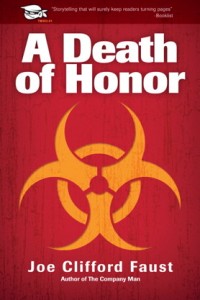
As some of you may have kenned, I am in the process of converting my old novels, beginning with A Death of Honor, into ebook format for the Kindle and other similar devices. To that end, I have cut apart an old copy of the book purchased for that specific purpose and run the pages through a scanner, converting them into HTML, which is the basis of code for some of the major e-readers.

What has happened is that the OCR software made its best guess as to what to do, and I'm going through and cleaning up the results. I'm doing a lot with search and replace, but the end result has been that I'm going through the book at such a rate that I'm almost reading it again.

Not to mention that, when I do get everything in order, I've got to proof it on my Kindle.

It's an excruciating process. Here's why:

Benjamin Disreli said, "When I want to read a good book, I write one." Well, that's not me. I don't have Disraeli's ego, and I certainly don't have a tolerance for my own writing. Once upon a time, my editor sent me two of the first hot-off-the-press copies of Honor. I gave one to my wife and I took one, and we both sat down to read it. And it was fine.

Then, a novel and a half later, I decided to read it again. And to borrow a line from Roger Ebert, I hated, hated, hated, hated, hated it. I wrote this off to the fact that I was now 1 1/2 novels more experienced as a writer and could see the many mistakes I made in the first. So when The Company Man came out, I picked up my so-fresh-you-could-still-smell-the-sweetness-of-the-ink copy -- and being another two novels down the road, I couldn't even get through the first section.

That has happened now with every one of my novels. It's like there's an internal switch in my brain. I can deal with the book an infinite number of times in the production process, but once the published copy comes out, I am filled with the urge to do something to it that involves a ziplock bag, a .45 semiauto, and a shovel.1

But that's a good thing, I guess, because it doesn't let me dwell on the past for one, and it tells me I'm getting better as a writer. When I open those old books up, I see mistakes on every page I wish I could go back and fix. But I can't. But I can strive to not do them in the next one.

Which is what makes the task of getting Honor and my other novels Kindleized so excruciatingly painful. As I scroll down the screen looking for stray bits of code, my brain is desperately crying out to grab the red pen:2 "Oops, there's another show not tell. Move on, you're not allowed to fix that. Good heavens that's clunky. Suppose anyone will notice if I fix one thing, just this once? Whoa, there's another one just like it. Two fixes? Three? Oh, and there's another show not tell..."

I can't imagine what it's going to be like trying to read this beast on my Kindle. And then doing it five more times (no, you didn't miscount - Ferman's Devils and Boddekker's Demons will be released in a "restored" single volume edition).

At one time, many foolish years ago, I thought it would be interesting to do a scratch rewrite of A Death of Honor, to be published on the 25th anniversary of the original's release. My plan was to read the book to regain a sense of the plot, then toss it aside and write the book completely over again, replotting and rewiring as I went, with no further reference back to the original material.

Guess what? The 25th anniversary of Honor is in 2012. Before I start wishing that that whole Mayan calendar thing were true just so I could avoid reading it yet again, I can tell you unhesitatingly that I'm not going to do it. The whole conceit centered on my being a Famous Bestselling Author by then, and even if I was, my wife probably wouldn't stand for it, claiming that it was one of those self-indulgent things that writers do when they start feeling too pleased with themselves. Besides, I'm behind schedule on other great stories I want to tell you.

Meantime, I have to redouble my efforts to go to heaven because right now I'm getting a close-up glimpse of what my own personal hell would be.3 I also need to be a good boy when it comes to writing, so I can bring you more stories without the ghastly mistakes I made in those earlier books. And I can guarantee you that ...and that's the end of the news is going to be a real corker. At least, until I get the first printing of it in my hands.

---
  1. The funny thing is, I am still perfectly capable of talking to people about the books for the purposes of getting them to make a purchase.

  2. I know, I know, editing is traditionally done with a blue pencil. I use a red pen. Sue me.

  3. It also involves Yanni CD's, but that's a story for another day.


Wednesday, September 23, 2009

It's All Right To Feel A Little Fear  


So I have hooked and crooked my way into ownership of a new computer, one that isn't a collection of interconnected old parts cobbled together into a semblance of semi-functionality. Because of that, I now have a number of projects going.

First, I am starting to scan my novels into HTML format (thanks to some Iris soft/hardware) to format for the Kindle. I bought old copies of all of them from Amazon's shops, and am in the process of cutting the pages apart with an X-acto knife and feeding them through my nifty little scanner.

Second, I am in the process of formatting my three VBS plays for publication through Lulu.com and for the Kindle. The big hangup here seems to be the name of the imprint I will use for my self-publishing efforts. I'm trying to some up with something with a slight Biblical reference, but nothing to give the impression that it's strictly a religious imprint since the Kindle versions of my SF novels will be under the same imprint, along with cd's or mp3's of my music, if I ever get around to recording them. But nobody likes what I've come up with so far. Oh,well.

Third, I'm in the process of working out a new design of the website to coincide with the launch of all this previously mentioned stuff.

Finally, I'm editing the book code-named ...and that's the end of the news because, well, with a little work it'll be ready to hit the markets. It deserves better than to sit in the metaphorical closet under the metaphorical bowling shoes.

Funny thing about and/news. After I got my Kindle in February, I decided to read the manuscript again in preparation for editing it. Thing is, I wanted to read it in such a way that I wouldn't start marking it up, as is my instinct. Then I got a brilliant idea. I emailed it to my Kindle and read it there.

That experience was remarkable. It had the psychological impact - for me, anyway - of reading the book in a final form. I was able to actually step back and read it as a story, like it was coming out of a published book. At one point in my reading, I decided to try having the Kindle's Text to Speech feature read parts of the book to me during my commute. And heavens to Betsy, what a rush that was. You'd have thought that I was listening to an official audio book narrated by James Earl Jones himself.

Then something else happened. I started to feel a little scared and a lot sad. Because for the first time, as I was reading one of my own pieces of writing, I could tell it was good. Really good. And then it hit me: what if I never write anything else this good again?.

That's something I'm having to work through.

Currently, I'm about two-thirds of the way through taking a red pen to the manuscript. Then I will be going to the computer to put in the changes and rewrite from scratch some of the scenes that need work. Looking again at what I did, even with red pen in hand, that wistfulness and fear is coming back.

But I've decided to try and channel it.

I think and/news is good. And instead of being scared of it, I should let it make me feel confident that I can go on to another similarly epic project - not necessarily epic in pages, but epic in scope, perhaps. I'm thinking that perhaps soon will be a good time to start my UFO novel. Oddly enough, that book is going to be a study of human nature, and there's going to be a lot of emotional depth to it. There's emotional depth to and/news, so I'm thinking that perhaps it was a kind of dress rehearsal for writing the UFO book.

Instead of letting that fear and wistfulness intimidate me, I'm going to try and channel it into something good. So I'm looking at it as a kind of stagefright, the kind that always grips me on opening night. The feeling that, if I didn't get it, I would worry about how lame my performance would be. Call it that jumpiness that a race horse gets before the gate opens, although my own personal thoroughbredness is questionable.

That's where things stand today. I'm coming back onto the main road after the detour, the map is a little out of date, but I still pretty much know the way. Let's see how far I can get before stopping to ask for directions.


Now Using...

Scrivener for OS X


NEWS BLOG
ARCHIVES

2010
January

2009
December
November
October
September
August
July
June
May
April
March
February
January

2008
December
November
October
September
August
July
June
May
April
March
February
January

2007
December
November
October
September
August
July
June


JCF On...

Last.FM
Facebook


© 2008 by Joe Clifford Faust

Hover or Click!

This page is powered by Blogger. Isn't yours?

blog stats